

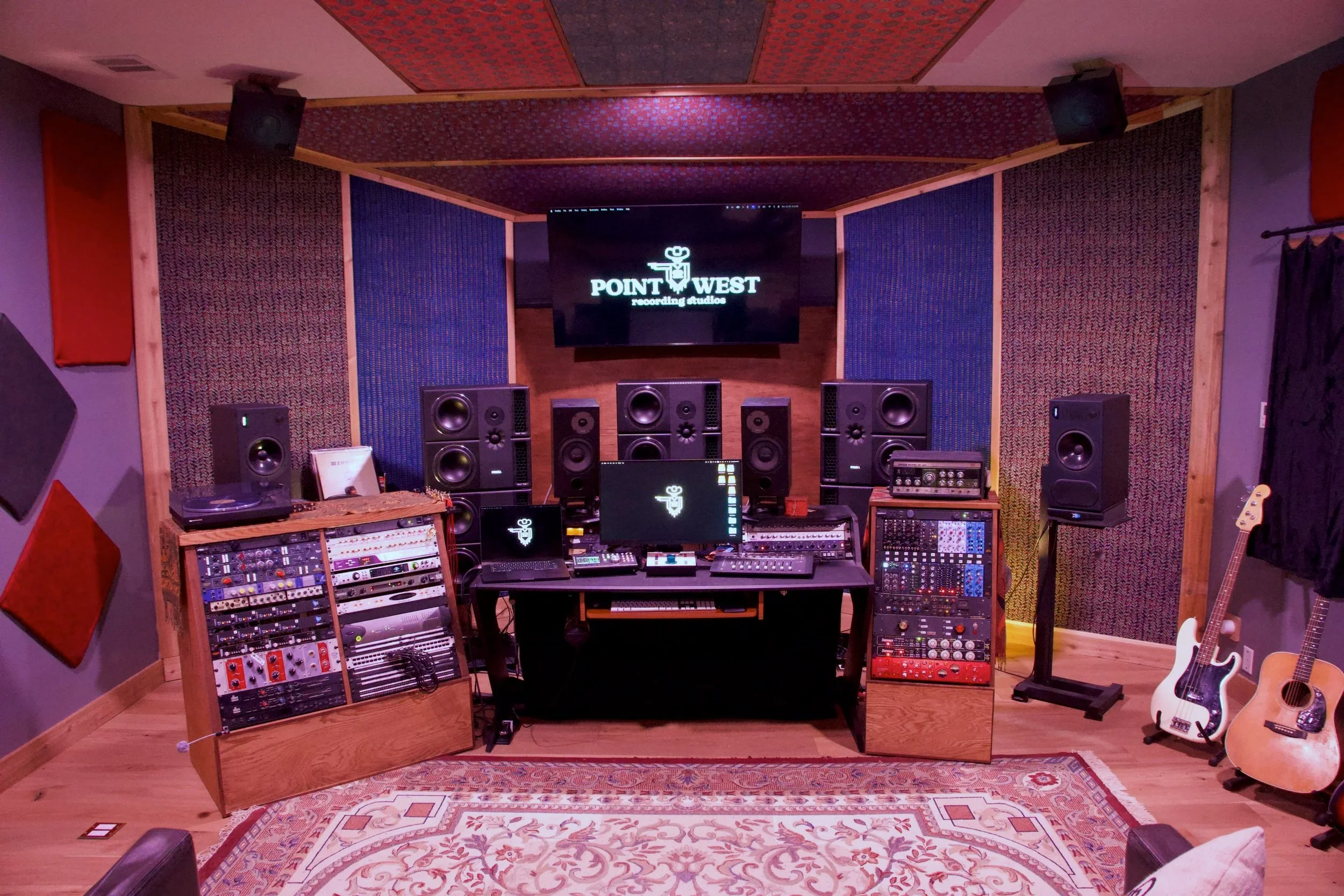
Studio A
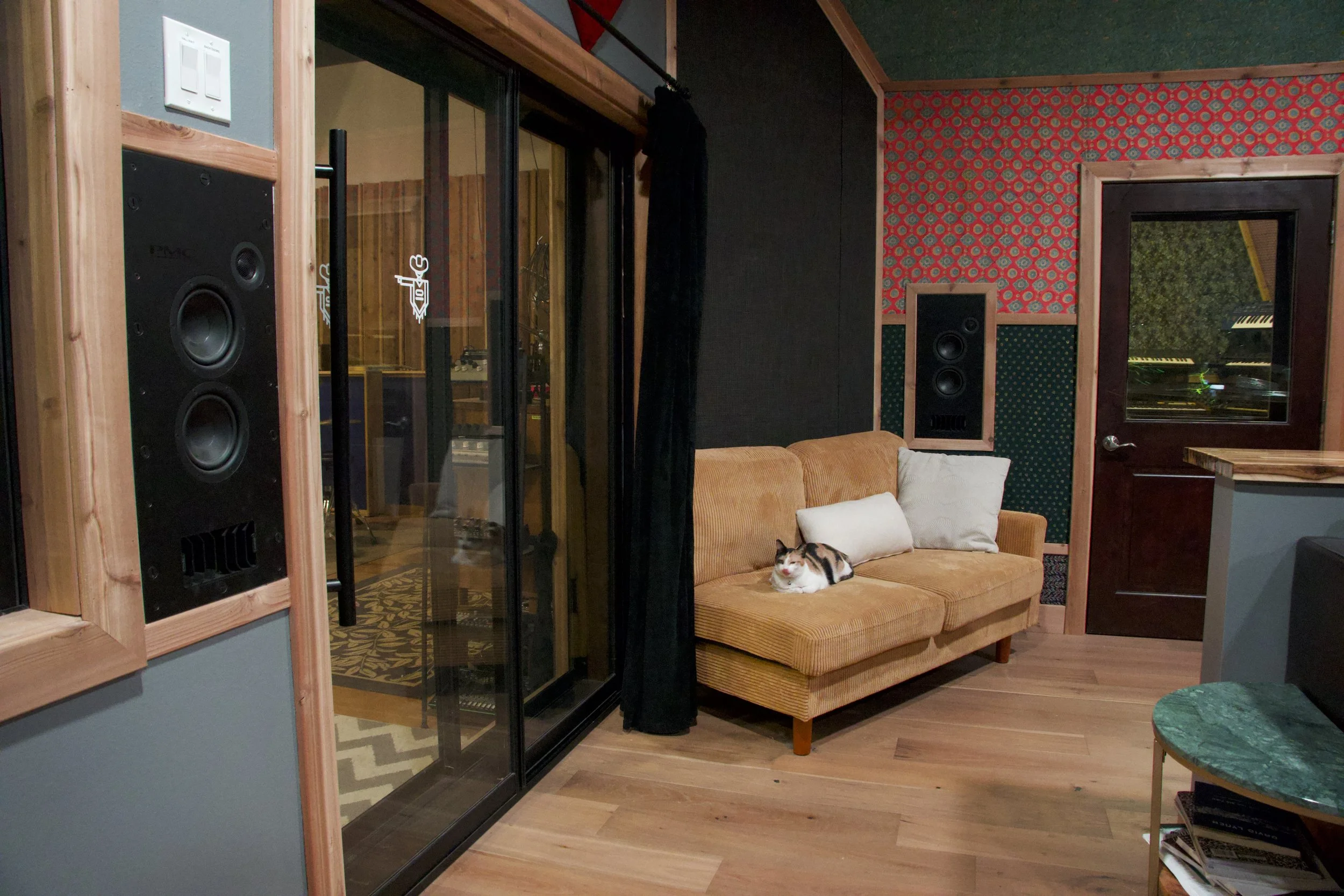
Studio A is a 9.1.4 control room capable of Dolby Atmos mixing and analog-to-immersive tracking. With PMC speakers, a stereo pair of ProAcs, and a mono Auratone speaker, a mixer can be sure to fully grasp what they are hearing in all three dimensions.
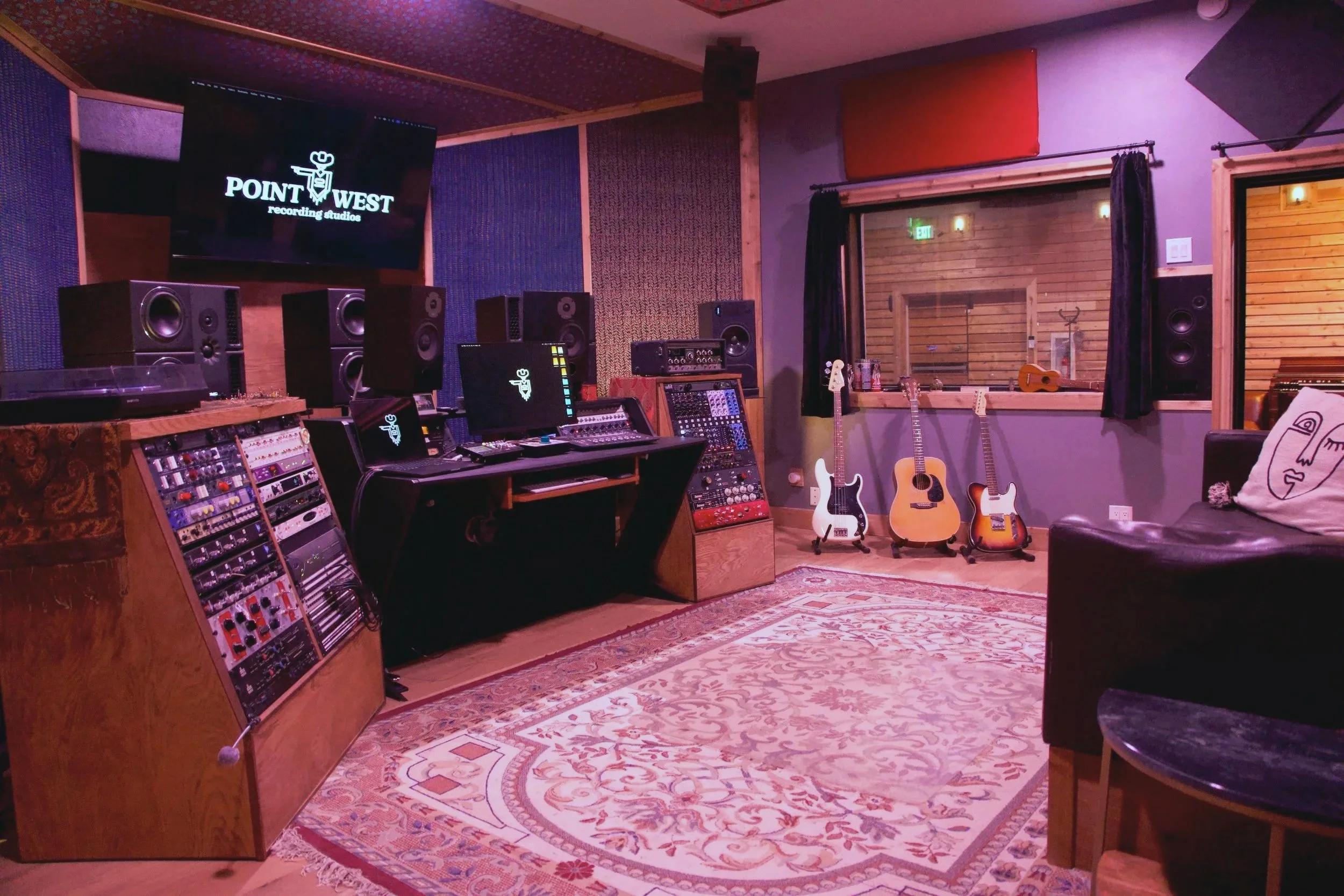
Comfort and View
The large control room can comfortably sit eight people while the artists working in the recommended listening position have optimal ear height. Positioned next to the Live Room and Dead Iso Room, everyone has direct line of sight to most other parts of the studio.
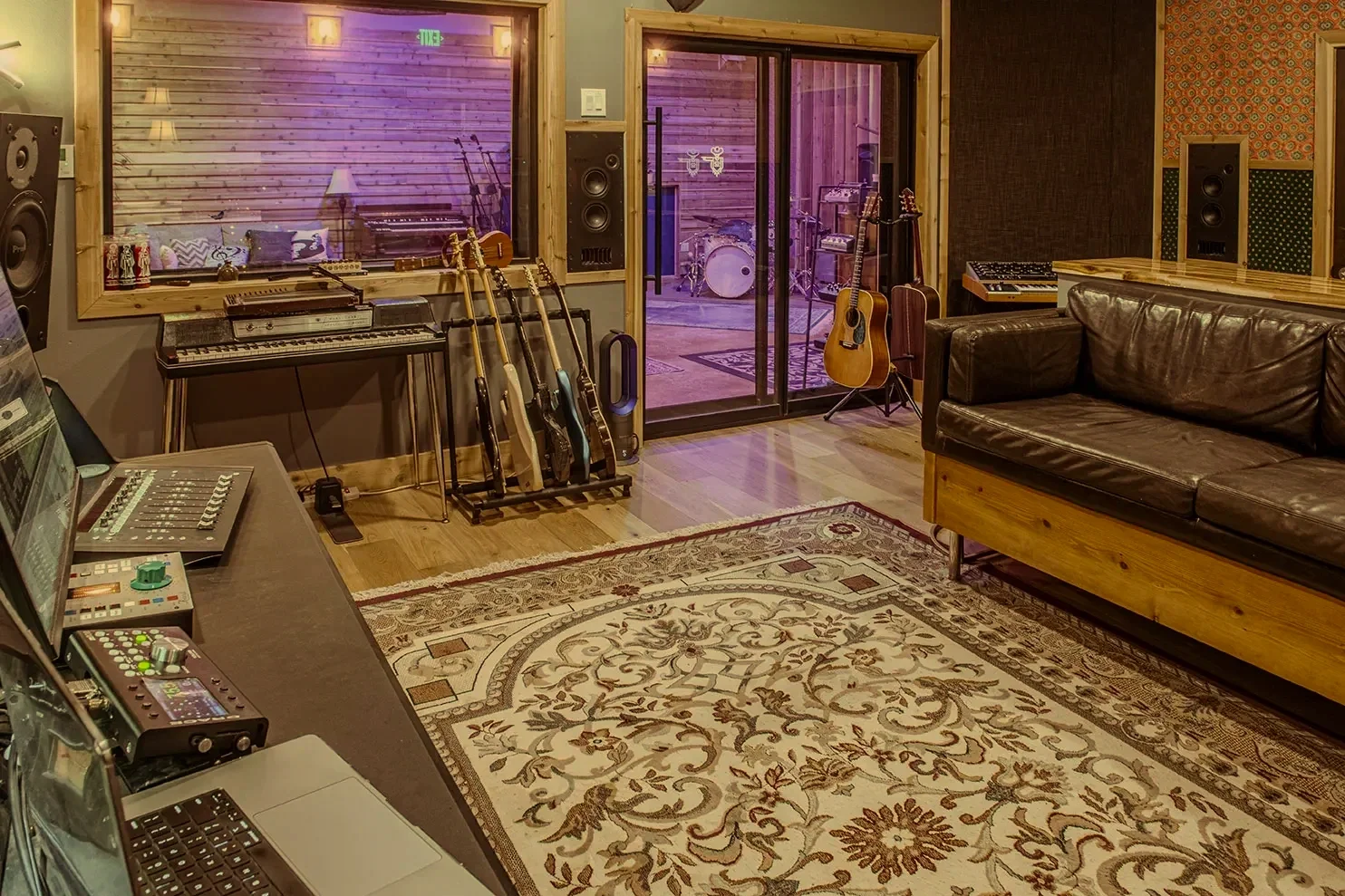
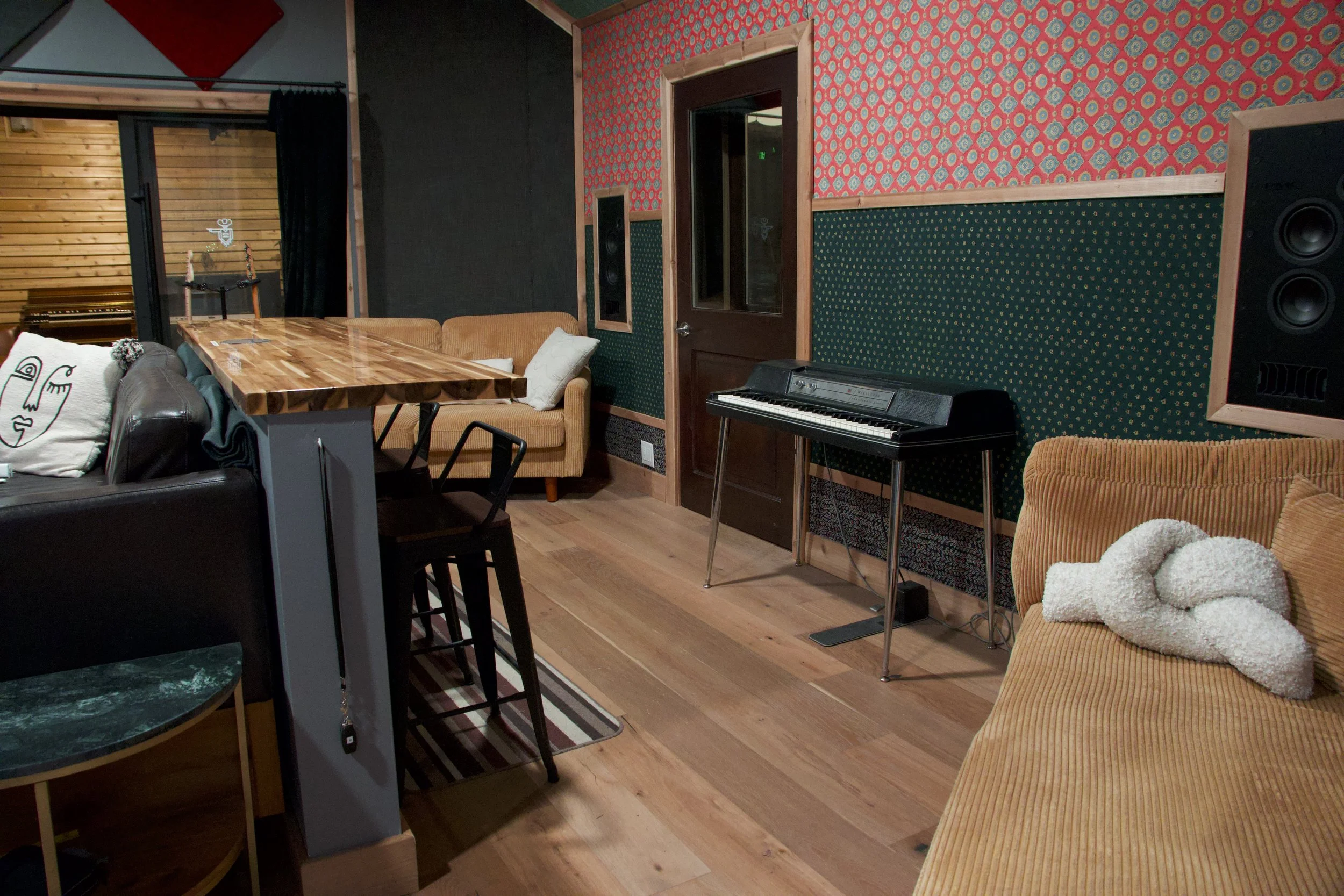
Sonic Accuracy
Control Room A was designed and built with laser accuracy to be the ideal dimensions for immersive monitoring. The 9.1.4 PMC monitoring system has a quad-amped mains with tweeters, mid-range, subs, and a sub-harmonic speaker producing everything below 25hz. The wide dispersion speaker designs create a large center section in stereo and immersive monitoring.
_____________________________________________________
Immersive Audio
A Brief History
In the music Industry, we have numerous traditions, some might be considered trends, while others have solidified themselves through years of consistent success. As the mono mixing format developed into stereo around the 60’s, now it shifts towards Immersive formats, led by Dolby, Sony (using MPEG-H), and Auro. Each advancement has allowed us to perceive and feel audio with an additional dimension compared to the previous one. Unlike movies, music did not continue its evolution past stereo for almost half a century, however, as we experience the world around us such as the chirping of a bird above us or someone calling us from behind, we naturally hear from all directions.
With quad and surround formats, the engineering of the end-user surround experience became too complex for the average listener to hear reproduced audio naturally because the format was too expensive and cumbersome. But as the digital revolution progressed, even though audio quality steadily degraded with low sample rates (CD’s, Mp3’s, then Bluetooth) routing became more simple. Dolby, Sony, and Auro, saw this need and programmed software (Atmos, 360, and 3D, respectively) that has recently been introduced into common music production software like Pro Tools, Logic, and Ableton. We can now easily enough engineer music that is mixed in immersive formats. Distribution was figured out hand in hand with the development of this format as well. Earbuds, headphones, home theaters and Cinemas have been the most popular way of accessing this format, but now with over 20 auto companies setting up Dolby Atmos formats to play back in their vehicles (compared to 4 this time last year) we are breaking out of the necessity of binaural and theatrical experience formats. These car companies are putting immersive Dobly Atmos in an everyday listener's most accessible high quality speaker system.
Taking Advantage of the Trend
Through the initial two formats of mono and stereo, making records has proven to be most ergonomic and efficient in three stages: tracking, mixing, and mastering. As the spatial world has developed, it has been considered a secondary stage that comes after the mastering of the Stereo mix (as stereo was to mono in its development). This does provide a stepped procedure that allows a high level of control on the making of an immersive mix that brings that mix to a close representation of the stereo master, and also another point of monetization for studios and engineers, but leaves the immersive format for post production. This effectively adds two stages to the already existing three stages of making a record… Stereo tracking, stereo mixing, stereo mastering, Atmos mixing, then finally, Atmos mastering. It is understandable that this process is necessary for something that has been previously released, like doing catalog work or other remixes to retain the original fell of the song, but taking it away from the creative process of tracking underutilizes the power of the tools immersive production provides, elongates the record making process, and makes it more expensive.
Through my past two years of experience in immersive music creation, I have learned and utilized the immense power of this format which has 5x the canvas of traditional stereo. My studio team and I all believe that the artists and producers should wield the power as early in the process as possible in their own creative ways. We’ve designed and built a studio that aligns with these principals and is equipped to seamlessly integrate the immersive world into the initial creative stages of tracking, even trough tape. This would give all the power of the Immersive format to the artist, upfront, within their creative environment, to make their songs sound like they do inside their head. By doing so we positioned the listener into a space that accurately represents the music as it is intended to be heard. No loudness war, no narrowed formats, just raw, immersive, and lossless songs that bring the listener back to the experiences like they had listening to music as they did growing up.